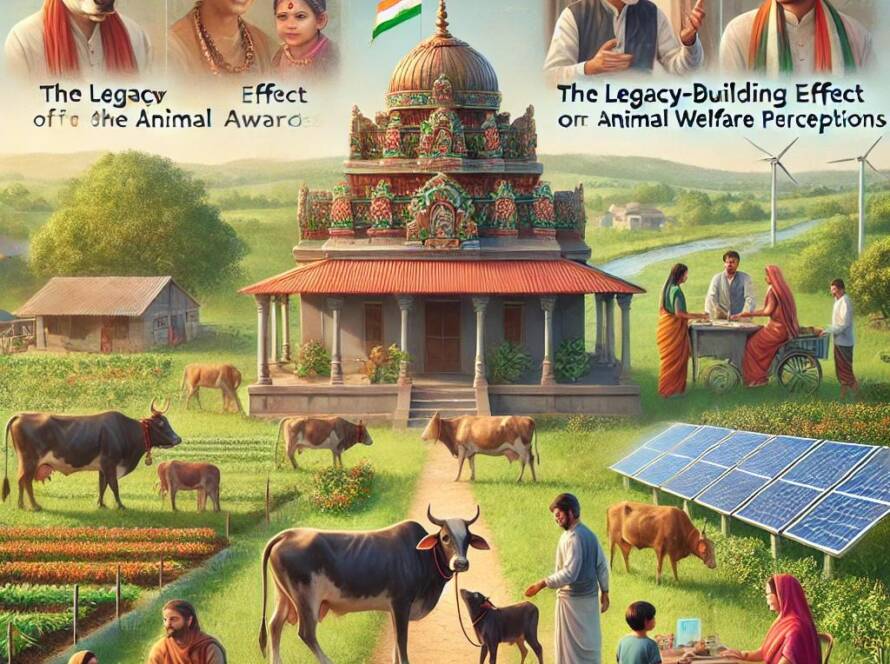
The Gau Mata Awards celebrate the dedication, compassion, and hard work of visionaries who have made remarkable contributions to cow welfare and environmental conservation. These champions, from various walks of life, exemplify a commitment to promoting sustainability, preserving cultural heritage, and fostering compassion. By recognizing their stories, the Gau Mata Awards inspire others to take action and reaffirm the critical role of Gau Mata (Mother Cow) in cultural and environmental health. Here are some of the stories of Gau Mata Award winners who are making a profound difference.
- Reviving Organic Farming through Cow-Based Agriculture
One of the recent Gau Mata Award recipients, Kavita Singh, is a rural farmer who has pioneered organic farming methods that rely heavily on cow-based products. She promotes the use of cow dung and urine as natural fertilizers and pesticides among local farmers, helping them reduce dependence on chemical inputs. Through her efforts, not only have crop yields improved, but the quality of soil and water in her village has also seen significant benefits. Kavita’s work illustrates how traditional methods can support sustainable agriculture, proving that with minimal resources, communities can achieve remarkable results that benefit both people and the environment. - Cow Sanctuaries as Safe Havens
Ajay Patel, another awardee, has devoted his life to rescuing and rehabilitating abandoned and injured cows. His cow sanctuary, nestled in a quiet rural area, has become a model for humane treatment and community involvement. Ajay started the sanctuary with a handful of volunteers and has now expanded to house hundreds of cows, offering them safe refuge, medical care, and a nurturing environment. Beyond providing a sanctuary for cows, Ajay’s initiative serves as an educational center where people learn about animal welfare and environmental stewardship. His work demonstrates the impact that one person can make in fostering empathy and compassion for animals. - Promoting Eco-Friendly Practices in Urban Areas
City-based environmentalist Priya Khanna, another Gau Mata Award winner, has taken cow welfare advocacy to urban spaces. Priya organizes workshops and events to raise awareness of the ecological benefits of cows, particularly the role of cow dung and urine in sustainable gardening and organic farming. She partners with urban farming groups to promote rooftop gardens and community green spaces that utilize cow-based organic fertilizers. Priya’s approach exemplifies how modern urban living can incorporate traditional eco-friendly practices, helping urban residents reconnect with nature and adopt sustainable practices within a city context. - Educating the Next Generation
Ravi Verma, a dedicated teacher and Gau Mata Award recipient, has established a unique educational program focused on cow welfare and conservation. His “Eco-Conscious Classrooms” initiative teaches children about the importance of respecting and caring for cows, as well as broader lessons on environmental responsibility. Ravi’s program includes hands-on activities, such as visits to local farms and cow sanctuaries, where students learn how cows play an integral role in agriculture and sustainability. Through this initiative, Ravi is fostering a new generation of environmentally aware and compassionate individuals, proving that education can be a powerful tool for change.
- Preserving Indigenous Breeds
Dr. Meera Reddy, a veterinarian and conservationist, received the Gau Mata Award for her work in preserving indigenous cow breeds. Concerned with the decline of native cow populations due to cross-breeding, Dr. Meera has led a project to safeguard native breeds and promote their unique qualities. Her research highlights the resilience and adaptability of indigenous cows to local climates, making them an asset in sustainable farming. By promoting these breeds, she is also helping to maintain biodiversity and ecological balance, proving that animal welfare and environmental conservation go hand in hand.
- Empowering Women through Cow Welfare Initiatives
Seema Sharma, another inspiring awardee, is known for her work in empowering women in her village through cow welfare programs. She trains women in her community to make organic products, such as soaps, biogas, and fertilizers, from cow dung and urine. By doing so, she has created a source of income for these women, helping them become financially independent while contributing to sustainable practices. Seema’s initiative highlights the transformative power of cow welfare in rural economies, where cows become both a source of income and a way to connect people with eco-friendly practices.
Conclusion: Inspiring a Movement of Compassion and Sustainability
The stories of Gau Mata Award winners reveal how one person’s efforts can ripple outward to inspire entire communities and regions. These champions of cow welfare and environmental conservation are reshaping the world around them by blending traditional wisdom with modern practices, fostering a movement of compassion, sustainability, and resilience. They remind us that Gau Mata is not only a symbol of cultural heritage but also a pillar of environmental health. The Gau Mata Awards honor these individuals and their work, motivating us all to contribute to a greener, more compassionate future.